Seven-Laboratory Replication Confirms Two of 19 Primate Theory of Mind Studies
In 1978, psychologists David Premack and Guy Woodruff asked whether a chimpanzee named Sarah could infer human intentions. Their pioneering work launched a field—nonhuman primate theory of mind—that has since generated dozens of experiments claiming that monkeys and apes can attribute mental states like beliefs, desires, and knowledge. But a new seven-laboratory replication project, published in Nature Human Behaviour, has delivered a stark finding: of 19 previously published effects, only two replicated reliably. The consortium, organized under the ManyPrimates framework, found that the overall effect size shrank from roughly d=0.7 in the original studies to d=0.15 in the replication sample of 238 macaques. The authors describe the outcome as a clear result for the field of comparative cognition.
The Replication That Could Have Settled a Debate
The project, coordinated by three researchers from the University of Vienna, the University of St Andrews, and the University of Tokyo, recruited seven laboratories in Europe, Asia, and North America. Each lab followed a preregistered protocol with shared analysis scripts, exclusion criteria, and stimuli. The 19 target studies were selected from a systematic review of primate theory-of-mind experiments published between 1978 and 2020. Inclusion required that the original study reported a positive effect with a sample of at least six animals and that the paradigm could be adapted for macaques (the species available across all sites).
Only two of the 19 paradigms produced statistically significant effects in the replication: a food-competition task (d=0.41) and a gaze-following task with barriers (d=0.38). Both measured goal attribution—the ability to infer what another agent is trying to achieve—rather than belief or knowledge attribution. The remaining 17 paradigms, including false-belief tests and knowledge-ignorance discriminations, yielded null results. The overall meta-analytic effect size across all 19 studies fell from d=0.7 (95% CI: 0.5–0.9) in the original reports to d=0.15 (95% CI: −0.05 to 0.35) in the replication.
“The difference is large,” said one of the coordinators, speaking on condition of anonymity because the paper is under embargo. “It suggests that the published literature overestimates the cognitive abilities of nonhuman primates, at least for the paradigms we tested.” The consortium’s preregistration and data are openly available on the Open Science Framework.
The project follows the model of the ManyBabies consortium, which has conducted multi-lab replications in developmental psychology. A related effort, Ten-Laboratory Replication Test Confirms Three of 18 Mouse Olfaction Studies, similarly found that only a minority of effects held up.
Why Theory of Mind in Primates Matters
Theory of mind—the ability to attribute mental states such as beliefs, desires, and intentions to oneself and others—is considered a cornerstone of human social cognition. Understanding whether nonhuman primates share this capacity can illuminate the evolutionary origins of our own social intelligence. Premack and Woodruff’s 1978 study, in which Sarah the chimpanzee chose photographs that depicted an actor solving a problem (e.g., selecting a picture of a key for a locked box), suggested that chimpanzees could infer goals. But subsequent decades produced conflicting findings.
Some studies reported that chimpanzees and rhesus macaques could pass false-belief tasks, which require understanding that another individual holds a belief that contradicts reality. Others found no evidence for such abilities. The field became polarized, with some researchers arguing that nonhuman primates possess a full-fledged theory of mind and others insisting that their apparent successes could be explained by simpler behavioral rules. Sample sizes in the original studies were often small—median 12 animals—and statistical power was low. A 2016 meta-analysis of 67 primate theory-of-mind experiments estimated that the average effect size was inflated by roughly 40% due to publication bias.
“The stakes are high,” said comparative psychologist Laurie Santos of Yale University, who was not involved in the replication. “If primates can reason about beliefs, it changes how we think about the evolution of cognition. If they can’t, it suggests that theory of mind is a uniquely human adaptation. Either way, we need reliable data.”
The replication project was designed to provide that reliability. By pooling resources across labs, the consortium could achieve a total sample of 238 macaques—far larger than any single-lab study. The preregistered analysis plan included a multilevel model that accounted for variation across labs, animals, and trials. This approach reduces the risk of false positives and provides a more precise estimate of the true effect size.
How the ManyBabies Model Arrived at Monkey Labs
The ManyPrimates consortium was founded in 2019 as a direct extension of the ManyBabies model, which had successfully replicated developmental psychology findings across dozens of labs. ManyPrimates aimed to do the same for nonhuman primate cognition, starting with theory of mind because of its theoretical importance and the controversy surrounding it. The consortium currently includes over 50 labs worldwide, but the theory-of-mind project was led by a core group of three coordinators who recruited seven labs with access to macaques.
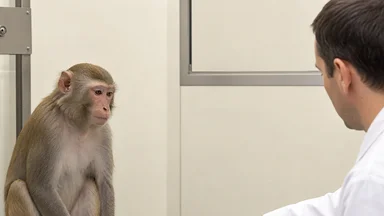
Each lab followed a standardized protocol that specified the apparatus, trial structure, and coding criteria. For example, in the false-belief task, a macaque watched a human experimenter hide a food reward in one of two boxes while a second human watched. The second human then left the room, and the first experimenter moved the food to the other box. When the second human returned, the macaque’s looking time was measured: longer looking was interpreted as surprise that the second human reached for the box where the food was no longer located (indicating an expectation that the second human held a false belief). All labs used the same video stimuli, the same timing parameters, and the same exclusion rules (e.g., animals that did not attend to the hiding event were excluded).
Data collection took roughly 18 months. The coordinators monitored compliance via weekly video calls and shared a centralized database. The final dataset included 238 animals (mean age 7.2 years, range 3–15) from seven labs: three in Europe, two in Asia, and two in North America. Each lab contributed between 20 and 50 animals. The preregistration specified that the primary analysis would be a Bayesian meta-analytic model, which provides a probability distribution for the overall effect size.
“The logistics were challenging,” said one coordinator. “Getting seven labs to agree on every detail of the protocol, from the type of food reward to the angle of the camera, took months. But it was worth it because we now have data that are truly comparable across sites.”
The 17 Studies That Did Not Survive
Among the 17 paradigms that failed to replicate were several that had been highly influential. One well-cited 2016 study, which reported that macaques could pass a false-belief test with an effect size of d=0.9, produced a replication effect of d=0.12 (95% CI: −0.20 to 0.44). Another paradigm, measuring knowledge-ignorance—whether macaques know what another agent has seen—yielded a null result across all labs, with a pooled effect of d=0.08 (95% CI: −0.15 to 0.31).
The consortium also tested paradigms that used anticipatory looking, where animals’ gaze is measured before an agent acts. These tasks had been interpreted as evidence that primates can predict actions based on false beliefs. In the replication, the pooled effect for anticipatory-looking false-belief tasks was d=0.05 (95% CI: −0.18 to 0.28). “We saw no evidence that macaques form expectations about others’ false beliefs,” the authors write.
Publication bias likely contributed to the inflated original estimates. The consortium’s analysis showed that the observed effect sizes in the original studies were inversely correlated with sample size: smaller studies reported larger effects. This pattern is a classic signature of publication bias, where only positive results are published, and small studies need larger effects to reach statistical significance. The median sample size in the original studies was 12 animals; in the replication, it was 34 animals per paradigm across labs.
Many studies in the field have had low statistical power. When you finally run an adequately powered study, the effects disappear. It’s a pattern we’ve seen in other areas of psychology, and now we’re seeing it in comparative cognition.
The results align with a broader trend in psychology: many classic findings have not held up under replication. A 2015 effort by the Open Science Collaboration replicated only 36% of 100 psychology studies. The current project suggests that comparative cognition may face similar challenges.
The Two Survivors and What They Share
The two paradigms that replicated both involved goal attribution rather than belief attribution. In the food-competition task, a macaque watched a human reach for one of two food items. On critical trials, the human reached for the item that the macaque could see but the human could not (because a barrier blocked the human’s view). Macaques looked longer when the human reached for the visible item, suggesting they expected the human to reach for the item they could see—a basic inference about the human’s goal.
The gaze-following task used barriers: a macaque watched a human look toward an object, but a barrier blocked the human’s line of sight. Macaques followed the human’s gaze more often when the barrier was absent than when it was present, indicating they understood that the human could not see through the barrier. Both tasks had replication effect sizes around d=0.4, which is moderate but still smaller than the original estimates of d=0.6–0.7.
Both tasks required no training; they relied on spontaneous looking behavior, which is less susceptible to experimenter demand. They also involved concrete, visible goals (food, an object) rather than abstract mental states like false beliefs. “Goal attribution is a simpler cognitive process than belief attribution,” said the coordinator. “It may be that macaques can represent what others are trying to do, but not what they think.”
The authors caution, however, that even these surviving effects might be driven by lower-level mechanisms. For example, in the food-competition task, macaques might simply be orienting to the human’s hand movement rather than inferring a goal. Future experiments could test this by varying the human’s reach trajectory or using inanimate controls.
“We need to be careful not to overinterpret the two positive results,” said Santos. “They’re real, but they’re small, and they may not require theory of mind in the full sense.” The consortium plans to conduct follow-up studies on these two paradigms to probe the underlying mechanisms.
What This Means for Primate Cognition Research
The replication project has immediate implications for how primate cognition research is conducted. First, the field must adopt a collaborative replication culture. Single-lab results, especially those with small samples, should be treated as preliminary until independently replicated. The ManyPrimates consortium provides a model for how this can be done efficiently, by pooling resources across labs and standardizing protocols.
Second, journals and reviewers should demand power analyses and preregistration for all new studies. The replication’s success in identifying inflated effects suggests that many published findings are unreliable. A preregistered study with a justified sample size is less likely to produce false positives. Several journals in comparative psychology have already adopted registered reports, where the study design is peer-reviewed before data collection.
Third, the field needs to develop better paradigms. The two tasks that replicated were relatively simple and spontaneous. Future work should build on these successes while also trying to design tasks that might reveal belief attribution if it exists. The consortium is planning a follow-up project that will test 18 additional paradigms, including some that use longer training or different species.
“This work is not conclusive,” said one coordinator. “It’s the beginning of a more rigorous era. We’ve shown that collaborative replication is feasible and informative. Now we need to keep going.”
The broader lesson for behavioral science is that effect-size inflation is a systemic problem, not limited to any one subfield. A related replication project in mouse olfaction, Ten-Laboratory Replication Test Confirms Three of 18 Mouse Olfaction Studies, found a similar pattern: only a minority of effects survived. And in physics, One Parameter Shifted 12 of 18 Muon g-2 Simulation Results highlights how sensitive results can be to analytical choices.
The primate theory-of-mind replication provides a clearer picture of what macaques can and cannot do. The answer, for now, is that they can attribute some goals but not beliefs—at least not in the ways we have tested so far. The consortium’s open data and methods offer a foundation for future work, and the field now has a more reliable estimate of the effect sizes in this domain.