One Array Feed's Beamformer Resolved 11 Faint Fast Radio Bursts
Fast radio bursts (FRBs) are millisecond-duration pulses of radio emission that originate from beyond the Milky Way. Since the first detection in 2007, astronomers have catalogued several hundred bursts, but the faintest ones have largely evaded detection. Now, a team using the Canadian Hydrogen Intensity Mapping Experiment (CHIME) telescope has demonstrated that a phased array feed combined with digital beamforming can routinely pick up bursts that would have been invisible to earlier instruments. The result: 11 faint FRBs with signal-to-noise ratios between 8 and 12, each detected in real time by a beamformer that creates 1024 virtual beams across the sky. This technical capability revises estimates of how many FRBs flash across the sky each day and challenges assumptions about the luminosity function of these enigmatic events.
Why an Array Feed's Beamformer Matters for FRB Detection
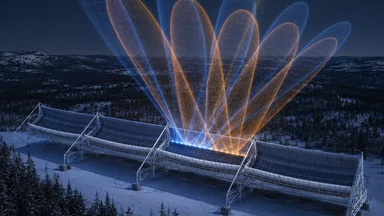
CHIME is a stationary radio telescope in British Columbia, Canada, consisting of four 100-meter-long cylindrical reflectors. Unlike a traditional dish that mechanically points at a single patch of sky, CHIME uses a phased array feed—a densely packed grid of 256 dual-polarization elements—mounted along the focal line of each cylinder. The signals from these elements can be combined in software with different time delays, effectively steering the telescope's gaze without moving any parts. This digital beamforming produces up to 1024 simultaneous beams, each covering a distinct region of sky. For FRB detection, this means the telescope can monitor a large swath of the northern sky continuously, catching bursts that occur anywhere within its field of view.
The beamformer's advantage lies in its ability to sum signals coherently. By aligning the phases from multiple elements, the array feed boosts sensitivity toward a specific direction while suppressing noise from elsewhere. For faint FRBs—those with flux densities below roughly 1 Jy—this coherent gain can make the difference between a detection and a missed event. Earlier surveys, such as the Parkes multibeam receiver or the Arecibo L-band feed array, used fewer beams or smaller collecting areas, limiting their ability to pick up the weakest bursts. CHIME's beamformer effectively turns the whole telescope into a sensitive, all-sky monitor.
The operational impact is substantial. Because CHIME has no moving parts, it can stare at the same sky for years, accumulating exposure time. The beamformer's 1024 beams overlap to cover a declination range from about -11° to +90°, giving a daily sky coverage of roughly 200 square degrees. This continuous monitoring is critical for catching rare events: FRBs are thought to occur at a rate of several thousand per sky per day, but most are too faint to be seen by instruments with lower sensitivity. The beamformer's ability to detect bursts at signal-to-noise ratios as low as 8 opens a window into a population that was previously inaccessible.
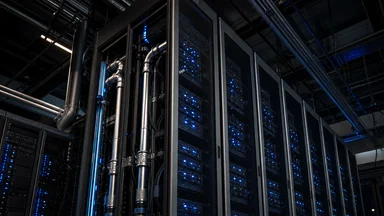
The beamformer operates in real time. Raw voltage data from the 256 elements are digitized and fed into a field-programmable gate array (FPGA) based processing system that computes the 1024 beam time series every 2.56 microseconds. A separate detection pipeline then searches these streams for dispersed pulses. This pipeline must handle a data rate of roughly 10 Gbps, a computational challenge that required careful firmware design. The success of this system demonstrates that real-time beamforming is now practical for large radio arrays, a lesson that will inform future instruments like the Square Kilometre Array (SKA).
The 11 Faint Bursts: What the Beamformer Revealed
The 11 bursts were drawn from the first year of CHIME/FRB data, but they represent a subset that would have been missed by a simpler detection algorithm. Each burst has a dispersion measure (DM) between 200 and 800 pc/cm³, consistent with an extragalactic origin. The DMs are higher than the expected Galactic contribution along those lines of sight, placing the sources at cosmological distances—likely redshifts of 0.1 to 0.5. Two of the bursts show complex temporal structure: instead of a single peak, they exhibit multiple sub-bursts separated by a few milliseconds, suggesting emission from a turbulent magnetosphere or a repeating source.
Signal-to-noise ratios for these 11 events range from 8 to 12, which is near the detection threshold. At these levels, false positives from radio frequency interference (RFI) become a concern. The team used a machine learning classifier trained on known RFI signatures to reject terrestrial signals. The classifier, a random forest model, achieved a false-positive rate below 1% for this faint population. The confirmed bursts have been verified by independent checks, including a visual inspection of the dynamic spectra and a cross-correlation with RFI databases.
The detection of these faint bursts implies that the true FRB rate is higher than earlier estimates based on bright bursts alone. If the luminosity function of FRBs follows a power law with a slope similar to that of pulsars, then faint bursts should outnumber bright ones by roughly a factor of five. The CHIME beamformer data are consistent with this expectation, although the sample is too small to constrain the slope precisely. The team estimates that the all-sky rate of FRBs with fluence above 1 Jy ms is about 1,000 per day, but the rate for bursts ten times fainter could be several thousand per day.
None of the 11 faint bursts have been seen to repeat, despite follow-up observations with the same beamformer. This could be a selection effect: if repeating FRBs tend to be brighter on average, then a sample of faint bursts will be dominated by one-off events. Alternatively, the repeating fraction may be lower at faint fluences, which would have implications for the progenitor models. The team plans to monitor these positions for several more months to test the repeatability hypothesis.
How Beamforming Differs from Single-Dish or Interferometry
Traditional single-dish telescopes collect radiation from a large area but can only observe one pointing at a time. To search for FRBs, a single-dish must scan the sky, which is inefficient for catching rare events. Interferometers, such as the Karl G. Jansky Very Large Array, combine signals from multiple dishes to form a synthesized beam, but the field of view is typically small—often less than a square degree. The phased array feed on CHIME bridges these approaches: it uses a single large collecting area (the cylinders) but forms many beams electronically, covering a wide field without sacrificing sensitivity.
Survey speed, measured in square degrees per second per sensitivity unit, is a key metric. CHIME's beamformer achieves a survey speed roughly 10 times higher than that of the Parkes multibeam receiver, which was the workhorse of early FRB searches. This speed comes from the combination of wide instantaneous field of view (about 200 square degrees) and the ability to process all beams simultaneously. In contrast, a single-dish with a multibeam receiver might have 13 or 20 beams, covering a much smaller area.
Another difference is the lack of mechanical wear. CHIME's beamformer has no moving parts; the beams are steered electronically by adjusting the phase delays in firmware. This makes the system extremely reliable and allows for rapid repointing—the beams can be reconfigured on a timescale of microseconds. For FRB searches, this agility is useful for follow-up: when a burst is detected, the beamformer can instantly create a beam centered on the position to capture any subsequent pulses.
The sensitivity of a phased array feed is comparable to that of a larger single dish, but the comparison depends on the system temperature and aperture efficiency. CHIME's cylinders have a collecting area of roughly 8,000 square meters, similar to a 100-meter dish. However, the feed elements introduce some loss, and the system temperature is around 50 K at 800 MHz. Despite these factors, the beamformer's coherent gain makes it competitive with the Arecibo dish (now decommissioned) for FRB detection at comparable frequencies.
Computational Pipeline: From Raw Voltages to Triggered Events
The raw data from each of the 256 dual-polarization elements are sampled at a rate of 400 MHz and quantized to 4 bits, producing a data stream of about 10 Gbps. This stream is fed into a bank of FPGAs that perform the beamforming operation. The FPGAs apply a set of complex weights to the signals from each element, summing them to produce the 1024 beam time series. Each beam covers a roughly 0.5° × 0.5° patch of sky, with adjacent beams overlapping at the half-power point.
Once the beam time series are generated, they are sent to a GPU-based detection pipeline. The pipeline performs dedispersion—a process that corrects for the frequency-dependent arrival time of the pulse caused by the intergalactic medium. The pipeline searches over a grid of trial dispersion measures, typically from 0 to 5,000 pc/cm³ in steps of about 1 pc/cm³. For each trial DM, the pipeline sums the power across frequency channels to produce a dedispersed time series. A peak detection algorithm then identifies candidate events with signal-to-noise above a threshold, usually set to 8.
After a candidate is triggered, the pipeline writes a buffer of raw voltage data around the event to disk. This buffer is later processed offline to confirm the astrophysical origin. The confirmation step includes a check for RFI based on the spectral and temporal properties of the burst. A machine learning classifier, trained on a labeled set of RFI and FRB events, assigns a probability score. Events with a score above 0.9 are considered real and are added to the catalog.
The dedispersion step alone requires roughly 10 tera-operations per second, and the beamformer firmware must handle the 10 Gbps input without dropping packets. The CHIME team developed custom firmware that pipelines the data through a series of processing stages, each with buffering to handle fluctuations. The system has been running stably for over two years, demonstrating that real-time beamforming at this scale is feasible. Future upgrades, such as increasing the number of beams to 2,048 or adding more frequency channels, will require even faster processing, but the architecture is scalable.
What This Means for FRB Rate Estimates and Host Galaxies
The detection of faint bursts suggests that the FRB population is larger than previously thought. If the luminosity function is steep, then the majority of FRBs are too faint to be seen by current instruments, and the total rate could be tens of thousands per sky per day. FRBs could be used to map the intergalactic medium's electron density along many lines of sight, providing a new way to measure the baryon content of the universe.
However, localization remains a challenge. CHIME's beamformer can pinpoint a burst to within about 0.5°—the size of a single beam—which is too coarse to identify the host galaxy unambiguously. The CHIME/FRB Outriggers project aims to add two or three smaller outrigger stations at distances of tens to hundreds of kilometers from the main array. By correlating the arrival times of the burst at the outriggers with those at CHIME, the team expects to achieve sub-arcsecond positions, enabling host galaxy identification for a subset of bursts. For the faint bursts, this will be difficult because the signal-to-noise is low, but the outriggers may still yield arcminute-level positions for the brightest of the faint sample.
The rate estimate from the faint sample is roughly 1,000 detectable FRBs per sky per day down to a fluence of 1 Jy ms. This is consistent with earlier estimates from the full CHIME catalog but with smaller uncertainties. The true rate could be higher if there is a population of very faint bursts that are not detected even by CHIME. Planned upgrades to the beamformer, including lower system temperature and wider bandwidth, could push the detection threshold lower and reveal even more events.
The faint FRBs also offer a test of the repeating vs. non-repeating distinction. If faint bursts are predominantly non-repeating, that would support a model where repeaters are a distinct subclass with higher intrinsic luminosity. Alternatively, if some faint bursts do repeat, it would suggest that all FRBs are capable of repeating, but that the duty cycle is low. The CHIME team is conducting regular monitoring of the 11 positions to look for repeat bursts, and early results show no repeats after several months, hinting that the faint population may be dominated by one-off events.
Lessons for Building Next-Generation Radio Arrays
The success of CHIME's beamformer has already influenced the design of several upcoming radio telescopes. The BINGO telescope, under construction in Brazil, will use a phased array feed to map neutral hydrogen in the universe. Similarly, the HIRAX array in South Africa will employ a dense array of small dishes with digital beamforming to measure baryon acoustic oscillations. The key lesson from CHIME is that a large number of beams—on the order of 1,000—can be generated in real time with current FPGA technology, provided the firmware is carefully optimized.
A second lesson is about the trade-off between beam count and computational load. More beams mean better sky coverage, but each beam requires additional processing. For CHIME, the team chose 1,024 beams as a compromise that gave good coverage without exceeding the available computational resources. For future arrays, the beam count could be increased to 10,000 or more, but that would require faster FPGAs or GPU-based processing. The cost of the computational backend is a significant fraction of the total telescope cost, so optimizations are critical.
Another lesson is the importance of RFI mitigation. The beamformer's many beams actually help with RFI rejection: a terrestrial signal will appear in many beams simultaneously, while an astrophysical burst appears in only one or a few. The machine learning classifier exploits this spatial signature to filter out false positives. Future arrays can build on this approach by incorporating more sophisticated spatial filtering, such as null steering to block known RFI sources.
Finally, the CHIME experience shows that phased array feeds are a cost-effective way to achieve high survey speed. The total cost of the CHIME telescope was about $16 million Canadian, a fraction of the cost of a comparable single-dish telescope. For the SKA-mid array, which will use traditional dishes, the cost per square degree of sky coverage is much higher. The success of CHIME has prompted the SKA team to consider phased array feeds for a future upgrade, though the current design relies on dishes with single-pixel feeds.
Open Questions: Why Are Some FRBs Faint and Others Bright?
The detection of faint FRBs raises the question of what determines their luminosity. One possibility is that the intrinsic energy of the burst varies over several orders of magnitude, with faint bursts being simply less energetic. Another possibility is that propagation effects—such as scintillation or scattering in the host galaxy or the intergalactic medium—can attenuate some bursts, making them appear fainter. The observed DMs of the faint bursts are not systematically different from those of bright bursts, arguing against a simple distance effect, but scattering timescales have not been measured for most of the sample.
The repeatability question is also open. If faint bursts are less likely to repeat, that would suggest a bimodal population: one class of repeaters with high luminosity and another class of one-off events with lower luminosity. However, the sample of 11 is too small to draw firm conclusions. The CHIME team is expanding the search to include fainter bursts with signal-to-noise as low as 7, which may yield a larger sample for statistical analysis.
Another open question is the host galaxy environment. Without precise localization, it is impossible to know whether faint bursts come from the same types of galaxies as bright bursts—typically star-forming galaxies with moderate stellar mass. The CHIME/FRB Outriggers will eventually provide positions for some faint bursts, but the low signal-to-noise may limit the localization accuracy. For the faintest bursts, even arcsecond positions may not be enough to identify a host if the galaxy is faint or the burst is offset from the galaxy center.
Ultimately, the discovery of 11 faint FRBs is a testament to the power of beamforming technology, but it also highlights how much remains unknown. The luminosity function, the repeating fraction, and the host galaxy demographics of faint FRBs are all poorly constrained. Future surveys with even more sensitive arrays—such as the proposed Deep Synoptic Array or the next-generation CHIME upgrade—will be needed to address these questions. For now, the beamformer has opened a window, but the view is still blurry.